
PILLAR 05 · HEALTH
I LOOK
SUCCESSFUL —
BUT I'M
BURNED OUT.
Bone-tired. Wired. Carrying weight nobody knows about. This is the burnout guide for the high-functioning man who's been pretending he's fine for years — physical health, mental health, sleep, and how to rebuild all of it.
THE PROBLEM
THE BODY KEEPS THE SCORE. THE MIND KEEPS THE BILL.
Let's get real about something most men won't admit out loud. You're tired. Not "long week" tired. Bone-tired — the kind sleep doesn't fix. You've been carrying weight nobody knows about — stress, anxiety, low-grade depression, anger you can't fully explain — and you've been pretending you're fine for years.
If you've been searching "signs of male depression," "how to deal with burnout," "why am I always tired," or "men's mental health," this section was written for you. Specifically.
The Health pillar covers physical health, mental health, sleep, energy, and the connection between them. It's the foundation everything else stands on. You can have the best career, the strongest marriage, and a great financial position — but if your body and mind are breaking down, none of it works. So we start here.
WHAT HEALTH LOOKS LIKE WHEN THIS PILLAR IS WORKING
You wake up before your alarm with energy. You move through the day without crashing at 3pm. You sleep deeply. You handle stress without it shutting you down. Your body feels strong and capable, not constantly tight, sore, or fatigued. You make clear decisions instead of reactive ones. You feel like yourself.
Mentally, you're present. You can sit with hard emotions without spiraling or numbing out. You have real friendships where honest conversation happens. You handle setbacks without catastrophizing. You're not performing wellness — you're actually well. This isn't peak-athlete territory. It's baseline. And baseline is what most men have lost touch with.
DIAGNOSIS
WHY MEN'S HEALTH FALLS APART QUIETLY
PAIN TOLERANCE AS IDENTITY
Men were trained to push through — pain, fatigue, stress, sadness. The trait that made you successful in your career is the same one slowly destroying your health, because you've ignored the signals so long you can't hear them anymore.
SELF-MEDICATION
You manage anxiety with alcohol, stress with overwork, loneliness with screens, emptiness with food. All provide short-term relief and long-term destruction. The debt always comes due.
MENTAL HEALTH STIGMA
Men are far less likely to seek help. According to data from the National Institute of Mental Health and the CDC, men in the U.S. die by suicide at roughly four times the rate of women. The gap exists not because men don't struggle, but because the cultural script leaves no room for "I'm not okay."
DISGUISED DEPRESSION
Male depression often doesn't look like sadness. It looks like irritability, anger, withdrawal, workaholism, increased drinking. Men miss the diagnosis in themselves because the symptoms don't match the textbook description.
FROM THE WEIGHT — BY CHRISTOPHER WELLS
"I wrote this book because I watched too many men carry too much for too long while pretending they had it under control. Sometimes the cost was a marriage that quietly dissolved. Sometimes a heart attack at 52. Sometimes a man who survived but lost twenty years grinding through pain he never named."
THE FRAMEWORK
REBUILDING YOUR HEALTH — 5 STEPS
ACKNOWLEDGE WHAT'S REAL
You can't fix what you won't name. Inventory honestly: How are you actually doing? What have you been suppressing? What are you using to cope, and is it working? This isn't therapy — it's diagnostics.
BUILD THE BASICS
Sleep — 7–8 hours, consistent bedtime, no screens in bed. Movement — 30 minutes, four+ days a week. Nutrition — real food, less ultra-processed garbage and alcohol. Reduce inputs — cut news and social media that spike stress without giving you anything actionable. Not optional extras. The foundation.
FIND YOUR PEOPLE
Isolation is both a symptom and a cause of poor mental health. Build at least one relationship where you can be honest — not someone to fix your problems, someone to listen. Friend, brother, mentor, coach, or therapist. The role matters less than the realness.
GET PROFESSIONAL HELP WHEN YOU NEED IT
If symptoms persist more than two weeks, if your functioning is declining, if your coping is escalating, or if you're having thoughts of self-harm — get help. Therapist, counselor, doctor. Medication isn't weakness if it's needed. It's a tool. Use the tools available to you.
MAINTAIN THE PRACTICE
Health is a daily discipline, not a once-and-done project. Weekly rhythm: daily basics, one honest conversation, a monthly check-in with yourself. Adjust as life shifts. This is exactly how the Foundation phase of The Reset is structured.
CRISIS RESOURCES
If you're struggling with thoughts of self-harm or suicide, please reach out. The 988 Suicide and Crisis Lifeline is available 24/7 — call or text 988. You don't have to carry this alone.
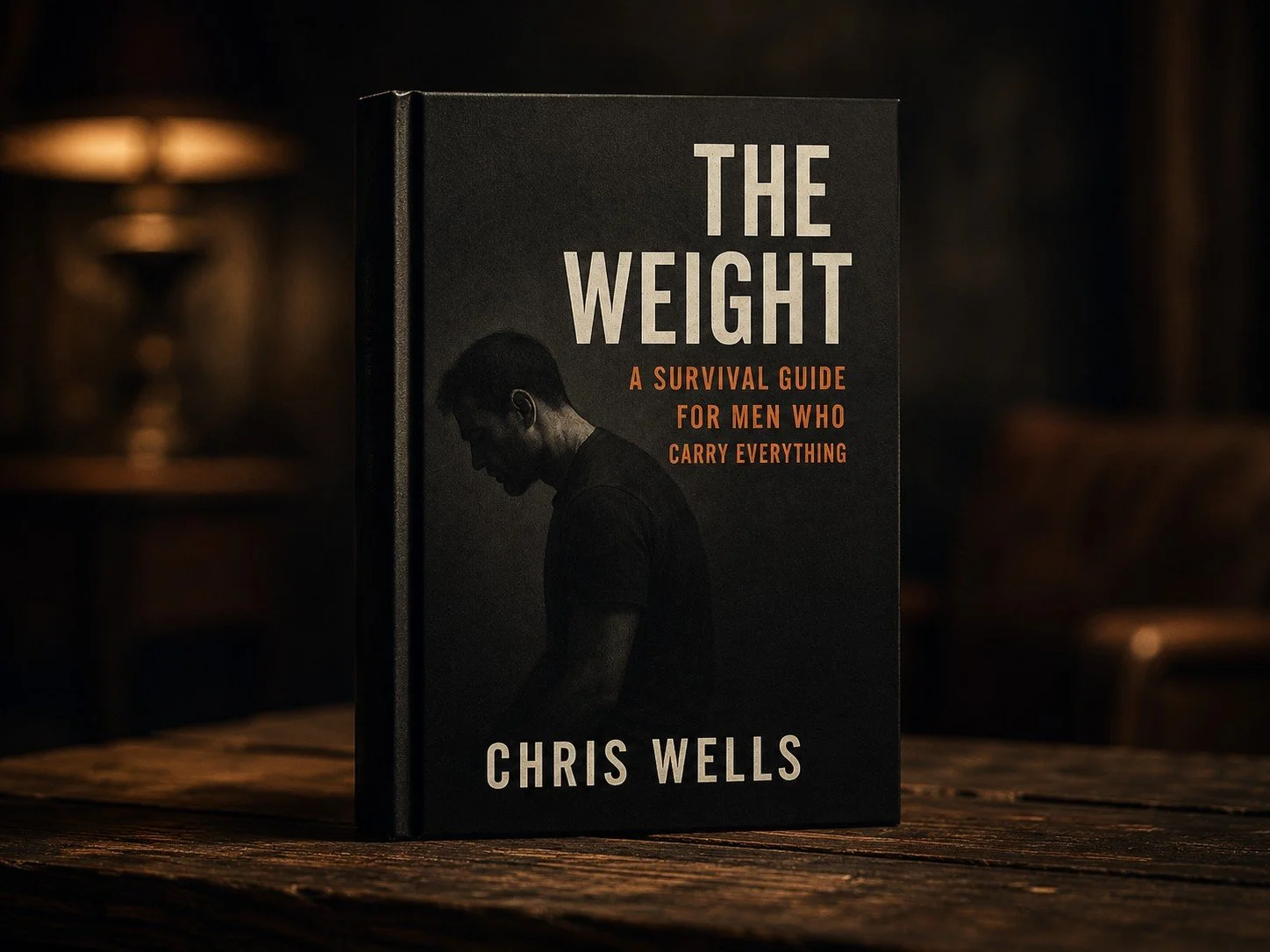
THE TOOL FOR THIS PILLAR
THE WEIGHT
The burnout guide written for the man who's been carrying too much for too long. It names what you've been suppressing, connects burnout to everything it's quietly damaging, and lays out how recovery actually works — through replacement and rest, not more willpower.
READ THE BURNOUT GUIDE →Rebuild the daily basics in 42 days with The Reset.

EVIDENCE & CREDENTIALS
WHO WROTE THIS
Christopher Wells is the founder of TASR Consulting and author of The Weight, The Reset, STUCK, F*ck The Script, and Financial Freedom for the Rest of Us. He writes about men's burnout from lived experience, not a clinical distance.
This page is educational and not a substitute for medical or mental-health care. If you're in crisis, use the resources above. TASR stands for Take Action. See Results.
QUESTIONS MEN ASK
MENTAL & PHYSICAL HEALTH — FAQ
How do I know if I'm depressed?⌄
Male depression often doesn't show up as sadness. It shows up as persistent irritability, loss of interest in things you used to enjoy, fatigue that sleep doesn't fix, withdrawal from people, increased drinking or risk-taking, sleep disruption, and difficulty concentrating. If several of these have lasted two weeks or more, talk to a doctor or therapist. Depression is treatable. Pretending isn't a treatment.
What does anxiety feel like in men?⌄
Often it doesn't feel like classic "anxiety." It feels like an inability to relax, constant mental scenario-planning, difficulty being present, jaw clenching and physical tension, sleep disruption, and avoidance of uncertainty. Many men misidentify this as "being driven." The difference: motivation feels like moving toward something; anxiety feels like running from something — even when you can't name what.
How do I deal with burnout?⌄
Stop trying to push through. Burnout is a capacity problem, not a performance problem — more effort makes it worse. The intervention is rest, boundaries, support, and sometimes professional help. The Weight is built around exactly this: the man who's been carrying too much for too long. Recovery is slower than you want it to be. It's also non-negotiable.
Why am I always angry?⌄
Anger is often a cover emotion. Underneath it: usually grief, fear, helplessness, or shame — emotions men were never trained to process directly. Ask yourself what's underneath the anger. The answer is rarely the thing that triggered it. Identifying the underlying emotion doesn't make the anger disappear, but it gives you a more accurate target for resolution.
How do I improve my mental health?⌄
Address the basics first — sleep, movement, nutrition, reducing input overload. These aren't soft fixes; they're some of the most evidence-supported interventions for anxiety and depression. Add real human connection (one honest relationship beats ten surface ones). Get professional help when needed. The men who improve consistently treat mental health as a daily practice, not a problem to solve once.
Should I see a therapist?⌄
If self-help hasn't shifted your patterns, yes. Look for therapists experienced with men — midlife transitions, burnout, anxiety. CBT (cognitive behavioral therapy) has strong evidence for anxiety and depression. If the first therapist doesn't click, try another; the relationship matters as much as the methodology. Therapy isn't weakness. It's strategic outsourcing.
Why do I drink to cope?⌄
Because it works in the short term. Alcohol genuinely numbs anxiety and quiets your head — temporarily. The problem is the rebound: it disrupts sleep, increases anxiety between drinking sessions, and worsens depression over time. If your drinking has increased in response to stress, that's data. The Weight covers this directly: replacement, not willpower, is the answer. Better tools beat better intentions.
How do I sleep better?⌄
Consistent bedtime, dark room, no screens for the last hour, no caffeine after early afternoon, no alcohol close to bed (it wrecks sleep architecture even though it makes you fall asleep faster). If you've done all that and still can't sleep, talk to a doctor — sleep apnea is dramatically underdiagnosed in men, and untreated it tanks your physical and mental health.
What are the signs of male depression?⌄
Persistent irritability and anger. Numbness instead of sadness. Workaholism as escape. Physical symptoms with no clear cause — chronic pain, digestive issues, fatigue. Increased drinking or risk-taking. Withdrawal from family and friends. Loss of interest in sex. Difficulty concentrating. If multiple symptoms have lasted two weeks or more, it's worth talking to a healthcare provider. Treatment works.
How do I stop feeling overwhelmed?⌄
Reduce inputs first. You're overwhelmed partly because you're consuming too much — news, social media, notifications, demands. Cut what you can. Then build a daily ritual that creates space — morning routine, a walk without your phone, ten minutes of silence. Then address the actual sources of overwhelm strategically rather than reactively. Overwhelm thrives on reactivity. Structure starves it.
PUT THE
WEIGHT DOWN.
The Weight is the honest burnout guide for the man who's been carrying too much for too long. Recovery starts with naming it — and this is where you start.
READ THE BURNOUT GUIDE →